I was born in Havana, Cuba, although I have very few memories of that first stage of my life. When I was five, my family and I moved to Barcelona, Spain, the city where I grew up and where I have spent most of my life.
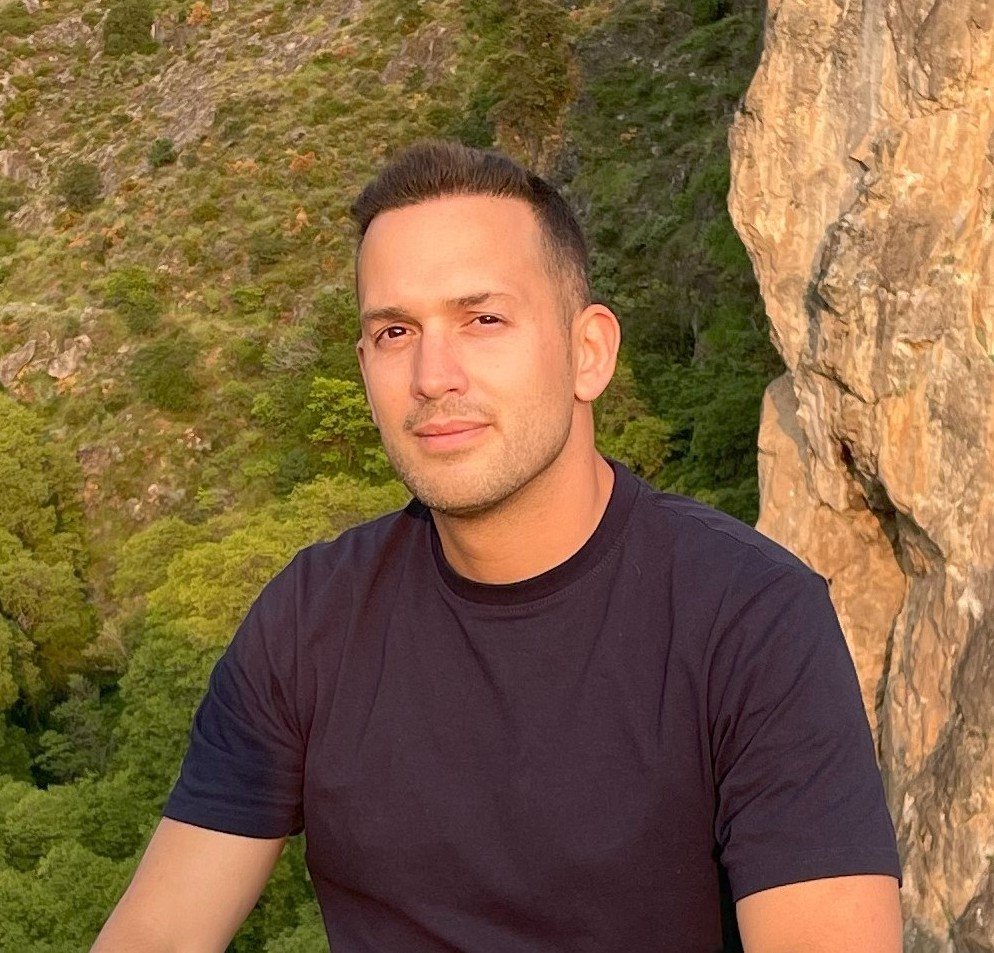
Over time, my path shifted once again. I now live in Granada, where I have gradually shaped this creative project called El Atlas de Yas.
I suppose those are the first coordinates. The geographical ones, at least.
The rest require a little more explanation.
A path that began far from here
My professional journey may not, at first glance, seem to have much to do with what you will find on these pages.
I first trained and worked in logistics and international transport. Later, I moved into technology, eventually specializing in the functional side of finance.
For years, my professional world revolved around processes, systems, data, relationships between different elements, and problems that had to be understood before a solution could be found.
It was a world that could give me many things, but there were certain questions it could not answer.
At some point, I began to feel that it was not entirely fulfilling me.
Not because there was necessarily anything wrong with the path I had chosen, but because there was a part of me that needed to understand other things.
And so a search began.
The search
I started reading.
For quite some time, I moved through books and ideas related to spirituality, trying to understand what lay behind some of the questions that had been accompanying me.
After a great deal of reading, I came across A Course in Miracles.
The first time, I went through it quickly, almost skimming it. I wanted to understand what was in front of me, get a general sense of what it was proposing, and keep moving.
But then I went back to the beginning.
The second reading was completely different.
This time, I moved slowly.
I read, stopped, thought, and returned to what I had read. And at some point during that process, I began writing down my own conclusions.
At first, writing was simply a way of trying to better understand what I was reading. Putting an idea into words forced me to look at it more precisely, discover its relationships, and find out whether I had truly understood it.
Without realizing it, something else was happening.
I was learning to write.
Not because I had decided to become a writer, nor because I thought I had something to teach. Writing emerged as a consequence of the search.
And so writing became a way of thinking.
The more I wrote, the less I simply repeated the ideas I encountered, and the more I needed to examine them, connect them, and express them in my own words.
Until the moment came when that book, too, had fulfilled its purpose.
The bonfire
When that stage came to an end, I did something that held a very specific meaning for me: I burned A Course in Miracles in a bonfire.
It was not an act of rejection.
It was a farewell.
The book had been important precisely because it had brought me to a point where I felt I should no longer look to its pages for the next words.
It had laid the foundations.
And foundations have a peculiar purpose: once the building begins to rise, they disappear from view, yet they continue to support everything built upon them.
Burning the book was my way of marking that moment.
From then on, I wanted to continue the journey differently: to observe, think, write, and pay attention to the words that arose from within me.
I did not know where that would lead.
I only knew I had to continue.
One reality, many maps
As I continued writing, I found myself confronting the same problem again and again.
Reality resisted single explanations.
The more I tried to understand an experience, the more apparent it became that it could be observed from different places.
A behaviour could be explained simply by looking at what a person did. But you could also look at the inner state from which they acted. Behind that state there might be certain beliefs. And behind those beliefs, a particular idea of who that person was.
Changing the level changed the explanation.
And yet, we were still looking at the same experience.
I began to understand reality as something multidimensional, made up of different layers constantly interacting with one another.
One layer does not necessarily invalidate another.
It explains another part.
What is tangible may be the manifestation of something happening in a less visible layer. An action may arise from a pattern of behaviour; that behaviour may be connected to an inner state; that state may be sustained by certain beliefs; and those beliefs may rest upon a particular identity.
At the same time, what happens in one layer can alter the others.
Reality began to look less like a line and more like a territory.
And then the map appeared.
The Atlas
A map is never the territory.
It is a representation that selects certain elements of the territory so that we can observe something that would otherwise be more difficult to distinguish.
A political map, a topographical map, and a climate map can represent exactly the same place while showing us completely different things.
None of them contains the whole territory.
But each can help us understand it from a different perspective.
That was exactly what I had been trying to do through writing.
To build maps.
Maps of identity, beliefs, relationships, fear, guilt, behaviour, decisions, or any other experience that awakened in me the need to understand.
Some begin with a film.
Others with a story.
Others with an idea, a conversation, a contradiction, or a question.
The starting point changes.
The intention remains.
To observe a part of reality, try to uncover the relationships within it, and build a representation that can help us find our way through it.
That is how El Atlas de Yas was born.
Not as an attempt to create a single map capable of explaining everything, but precisely from the recognition that no single map ever could.
The Atlas is the collection.
The person behind the maps
My professional background is still part of me.
Perhaps even more than I initially realized.
Logistics, technology, and financial systems belong to worlds very different from spirituality, writing, or analysing a film. Yet over time, I have discovered a common thread running through all of them.
I have always been interested in understanding how the parts of a system relate to one another.
What depends on what.
What happens when one piece changes.
What structure remains hidden behind what we can see.
Perhaps that is why my search eventually took this form.
I am not a psychologist or a philosopher. Nor do I intend to present myself as someone who possesses the answers to the subjects I explore.
I am someone trying to understand.
Writing is one of the tools I use to do so, and The Atlas is the form I have found to organize and share what emerges from that search.
The maps you will find here, therefore, are maps I first needed to build for myself.
I share them because perhaps one of these representations might help you look from a different place at something you, too, are trying to understand.
You do not have to accept the map.
You can explore it, question it, compare it with your own experience, and leave it behind when it is no longer useful to you.
After all, a map only makes sense for as long as it helps us find our way.
I was born in Havana, grew up in Barcelona, and today I write from Granada.
Those are my coordinates.
The rest of the territory, I am still exploring.